How to quit weed: a practical plan for the first 30 days

To quit weed, pick a quit date in the next week or two, get rid of everything you use to smoke, and plan ahead for the three things behind most relapses: withdrawal in the first week, boredom in the empty evenings, and social situations where someone offers you a hit. Then track your progress every day so you can see it working.
Most people who quit for good have tried before. A previous attempt isn't a failure. It tells you what tripped you up last time.
How to quit weed: step by step
- Choose a quit date. Pick a day within the next two weeks, ideally at the start of a calm stretch and not the night before a festival.
- Clear out your stash and gear. Throw away or give away weed, papers, grinders, vapes and lighters. Delete your dealer's number.
- Write down your reason. One sentence about why you're quitting. Read it when a craving hits.
- Plan your evenings. Decide what you'll do during your usual smoking time for the whole first week.
- Prepare for social situations. Pick a couple of lines for turning weed down and tell one friend you're quitting.
- Track every day. Check in daily and log cravings so you can see the pattern and the progress.
Cold turkey or cutting down?
Both can work. Cold turkey gets withdrawal over with faster and takes away the daily decision of how much is OK today. Tapering, where you smoke a bit less each week until you stop, suits some heavy users, but it's easy to stall at "just a little in the evening" for months.
If you've tried cutting down before and it didn't stick, a clean quit date is probably the better bet this time.
Your first week off weed
Expect poor sleep, a short temper and frequent cravings, mostly in the evenings. Eat regular meals even if you're not hungry, drink water, and keep your expectations for work and chores low. This week has one job, which is not smoking. The weed withdrawal timeline walks through what usually happens on each day.
Tell yourself in advance that day three or four will probably be the worst. When it arrives, you'll recognise it instead of reading it as a sign that quitting isn't working.
Plan for the three big relapse triggers
Withdrawal. Irritability, insomnia and low appetite are normal for two to three weeks. They pass. Knowing that makes them easier to sit through.
Boredom. Weed filled time. Once it's gone, evenings feel long. Have a list of things you can start in two minutes, sorted by energy level. There's one in the guide on what to do when you're bored after quitting.
Social pressure. A joint coming round the circle is where a lot of quits end. Pick your lines before you go out. These ways to say no to weed at a party work in most rooms.
What if you slip?
A slip is one session. A relapse is going back to your old pattern. If you smoke once, don't treat it as proof that you can't do this. Write down what led up to it (where you were, who with, how you felt), adjust the plan for that situation, and carry on.
Your streak resets, but the days you put in still count. Your sleep, your tolerance and your habits don't snap back to zero after one night.
Why a quit weed app helps
Willpower runs low when you're tired, bored or surrounded by people smoking. An app gives you structure for exactly those moments, and a daily record of how far you've come.
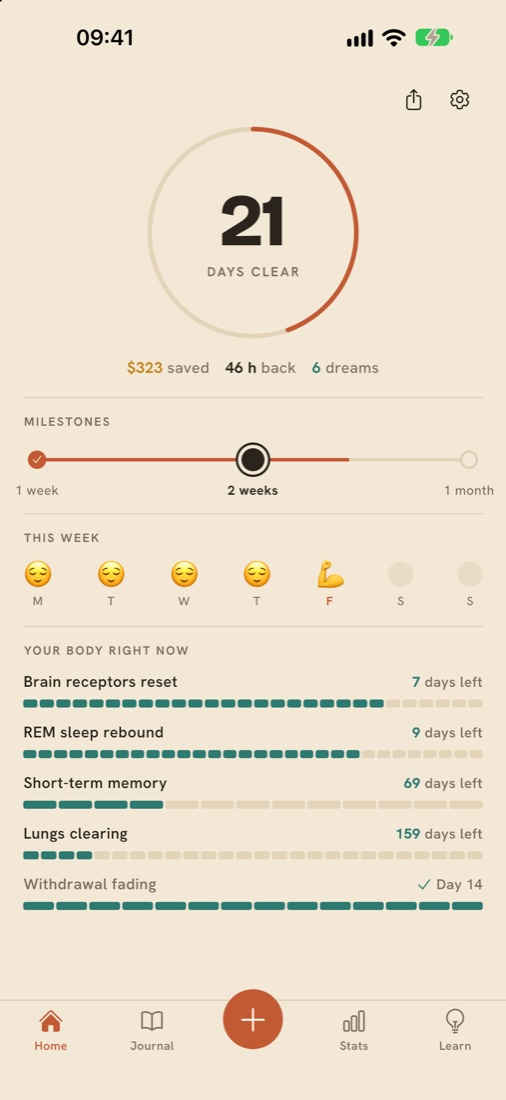
Foglift was made by someone who smoked for eight years. It's built around the parts of quitting weed that generic quit-smoking apps ignore: the dreams, the extra hours, the party, the boredom. Alongside those you get a streak ring, money and time saved, a craving log and short reads for each stage of your first months.
More questions
How long does it take to quit weed?
The hardest part, withdrawal, usually lasts two to three weeks. Breaking the habit takes longer. Many people say it's around three months before not smoking feels normal.
Can I quit weed without professional help?
Many people do. Support still makes it easier, whether that's a friend who knows, a group like Marijuana Anonymous, an app, or a doctor if you're a very heavy user or have other health concerns.